
Social Casino vs Sweepstakes Casino: Know Your Model Before You Play
 Available in US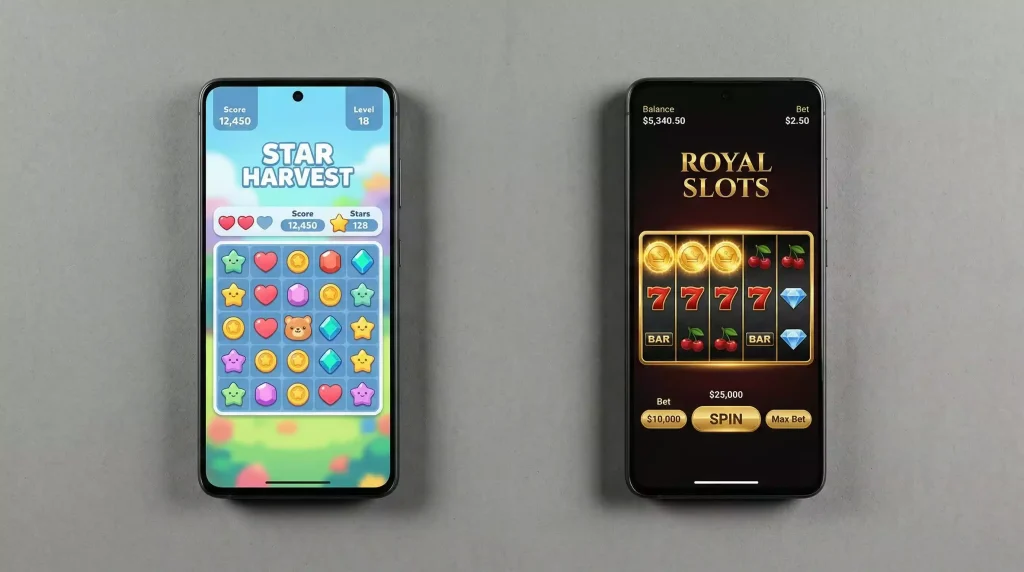
Social casinos and sweepstakes casinos look nearly identical from the outside. Both offer casino-style games playable from your browser or phone. Both use virtual currencies rather than direct cash wagers. Both market heavily to American players. Yet these models differ fundamentally in one crucial aspect: can you actually win real money? Understanding this distinction before you play prevents confusion about what you’re actually getting into.
The market sizes reflect meaningful differences in player behavior. According to industry analysis, the global social casino market generated approximately $7.1 billion in gross revenue in 2026. Meanwhile, the sweepstakes casino segment produced over $10.6 billion in gross revenue during the same period. These numbers suggest sweepstakes casinos attract more spending—likely because the possibility of real redemption changes player engagement economics.
This guide clarifies the distinction between social and sweepstakes casinos: what defines each model, how the critical redemption difference works, legal implications of each approach, and which model might suit different player preferences. Know your model before deciding where—and how—to play.
What Defines a Social Casino
Social casinos provide casino-style games purely for entertainment without any path to real-money redemption. You play with virtual chips or coins that have no cash value whatsoever. You can buy more virtual currency when you run out, but you can never convert winnings back to real money. The transactions are strictly one-directional: money flows in to purchase play time, but nothing flows back out.
Popular social casino apps appear throughout mobile app stores—some operated by major gaming companies, others by independent developers. Zynga Poker, Slotomania, House of Fun, and similar titles fall into this category. These apps often integrate with social networks, emphasizing community features like leaderboards, friend competitions, and social sharing. The “social” label reflects this emphasis on interactive entertainment over gambling.
The business model monetizes entertainment directly. Players who enjoy the games pay for continued play after exhausting free allocations. Without redemption possibility, spending decisions reflect pure entertainment valuation—you’re buying game time, not investment in potential returns. This distinction matters for how players should think about their spending.
Legal status is clearer for social casinos than sweepstakes platforms. Without redemption creating gambling-like economics, social casinos face fewer regulatory challenges. They’re essentially video games with casino themes rather than actual gambling mechanisms. This clarity doesn’t mean zero regulation—loot box mechanics and virtual currency sales attract some scrutiny—but the fundamental model raises fewer concerns.
What Defines a Sweepstakes Casino
Sweepstakes casinos add a redemption layer that social casinos lack. While you still purchase virtual currency (typically Gold Coins) and play casino-style games, you also receive Sweeps Coins that accumulate redeemable value. Those Sweeps Coins can be converted to real cash prizes through a redemption process. The path to actual money makes sweepstakes casinos fundamentally different from pure social games.
The dual-currency system enables this structure. Gold Coins serve entertainment purposes with no redemption value—similar to social casino chips. Sweeps Coins carry redeemable value but cannot be purchased directly. You receive them as bonuses when buying Gold Coins, through daily logins, via mail-in requests, or through promotions. This structure maintains legal distinction from direct gambling while providing economic incentives resembling gambling.
Major sweepstakes casinos include Chumba Casino, Stake.us, Pulsz, McLuck, and WOW Vegas among others. These platforms market the entertainment aspect prominently while ensuring players understand redemption possibilities. The economic reality for most players resembles gambling regardless of technical legal classifications—money goes in through purchases, and money can come out through redemptions.
The sweepstakes framing leverages promotional sweepstakes laws rather than gambling regulations. By providing free entry methods (like mail-in requests) and framing redemption as “prize winning” rather than “gambling payout,” platforms argue they’re running promotional sweepstakes rather than gambling operations. This legal positioning enables nationwide operation without state gambling licenses—and creates the regulatory ambiguity that defines the industry.
The Critical Difference: Redemption
Redemption transforms player psychology and economics. At social casinos, spending decisions involve pure entertainment calculation—is this play session worth $10? At sweepstakes casinos, spending incorporates investment thinking—will this $10 potentially return $50? Whether that investment framing is mathematically justified matters less than how it affects behavior. Players engage differently when redemption exists.
Value perception changes entirely between models. Social casino players who spend $100 receive $100 of entertainment. Sweepstakes casino players who spend $100 might receive entertainment plus redemptions worth more or less than their spending. The variability creates gambling-like economics where some players profit while most don’t—contrasted with social casino’s uniform exchange of money for play time.
Addiction risks differ across models. While both involve potentially excessive spending on virtual entertainment, sweepstakes casinos’ redemption possibility adds gambling-like hooks. Variable reward schedules, near-miss experiences, and win-chasing behaviors all appear when real money outcomes exist. Social casinos can still be problematic, but the redemption element amplifies concerning dynamics.
Tax implications follow redemption. Social casino play creates no taxable events—you’re buying entertainment, not receiving income. Sweepstakes casino redemptions constitute taxable income. Platforms issue 1099 forms for redemptions over $600 annually, and players owe taxes regardless of whether forms are issued. This practical difference affects the actual cost-benefit calculation for players.
Legal Implications
Social casinos operate with relative legal clarity. Without redemption creating gambling economics, these platforms face minimal gambling-specific regulation. State gambling laws generally don’t apply to pure entertainment games without prize redemption. Social casinos can operate nationwide without navigating state-by-state gambling regulations.
Sweepstakes casinos exist in legal gray area that continues evolving. The sweepstakes promotional framework provides legal foundation, but regulators increasingly challenge this positioning. Multiple states have enacted restrictions specifically targeting sweepstakes casinos in 2026. Enforcement actions, cease-and-desist orders, and settlements demonstrate that the legal environment remains contested rather than settled.
Player risk differs between models. Social casino players risk only their spending—there’s no regulatory concern about their participation. Sweepstakes casino players in restricted states might face account closure and balance forfeiture if platforms withdraw due to enforcement pressure. While individual players rarely face direct legal consequences, they bear platform risk in uncertain regulatory environments.
Future regulatory direction remains uncertain. Some observers expect sweepstakes casinos to face increasing restrictions as states protect licensed gambling markets. Others anticipate eventual legitimization through regulation—creating licensed sweepstakes casino categories alongside traditional gambling. The industry’s future legal status affects whether current platforms remain viable long-term or face shutdown as regulations evolve.
Which Should You Choose
Pure entertainment seekers might prefer social casinos. If you want casino-themed games without caring about potential redemption, social casinos deliver that cleanly. No tax implications, no regulatory uncertainty, no redemption process complexity. You’re buying entertainment directly and receiving it without additional considerations. The simplicity appeals to players who just want to play.
Players motivated by winning potential gravitate toward sweepstakes casinos. The AGA research finding that 68% of sweepstakes players participate to win real money reflects this motivation. If you want the possibility—however statistically unlikely—of coming out ahead financially, only sweepstakes casinos provide that option. Social casinos mathematically guarantee net loss for all players.
Risk tolerance should inform choice. Sweepstakes casinos carry regulatory uncertainty, verification requirements, and redemption process complexity. Players wanting simpler experiences might find social casinos’ straightforward entertainment model preferable. Those comfortable navigating complications for redemption potential choose accordingly.
Honest self-assessment matters most. If you’re prone to problematic gambling behavior, sweepstakes casinos’ gambling-like elements create elevated risk. Social casinos can still enable excessive spending, but without redemption-driven “win it back” psychology. Players recognizing vulnerability to gambling problems might deliberately choose social casinos’ reduced hooks—or avoid both categories entirely.
Social Casino vs Sweepstakes Casino — More on this topic at usa sweepstakes casino.
See also Sweepstakes Casino Payment Methods.